
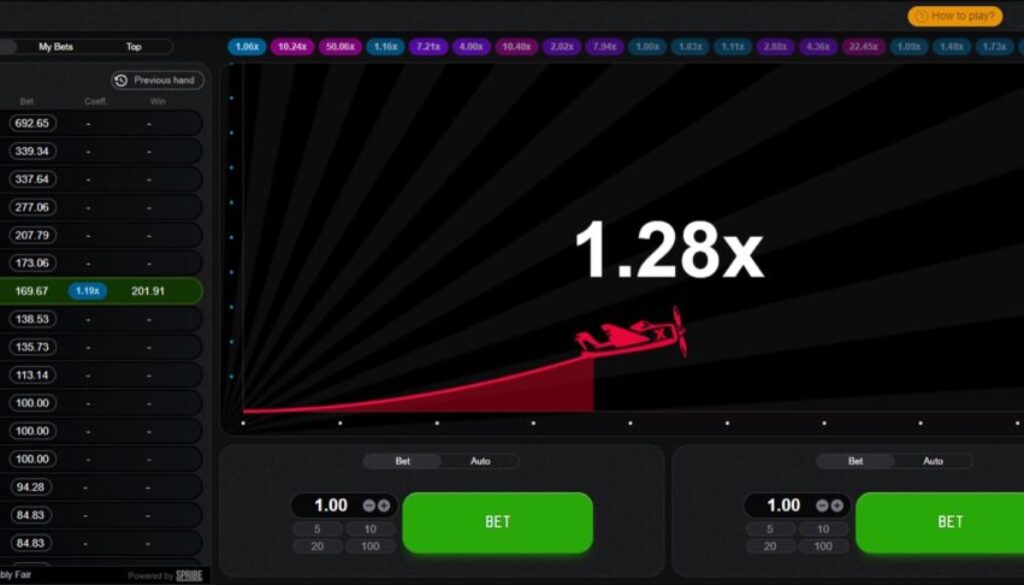
How to Win in Aviator: Setting Expectations
Aviator is a crash game from Spribe, a studio founded in Tbilisi, Georgia in August 2018, and it first went live in early 2019. Spribe describes it as a social multiplayer game built on an increasing curve that can crash at any moment. It is not a slot and has no bonus round: your only decision in each round is when to cash out.
Winning in Aviator therefore means something specific. The game returns 97% of all stakes over time, so no method produces long-term profit. What you control is how much you stake, where you cash out, and how much you are prepared to lose in a session. This guide explains the mechanism first, then the numbers, then a worked example.
How an Aviator round works
Each round starts with the plane at a multiplier of 1.00x. The multiplier climbs along a curve until the round crashes at a point fixed before take-off.
Rounds last about 8 to 30 seconds, with only a few seconds of betting time between them, so a player sees 60 to 90 rounds per hour. Before take-off you place a stake in one or two bet panels. While the plane flies, the cash-out button shows your stake multiplied by the current figure. Press it before the crash and you win that amount; if the plane leaves first, the stake is lost.
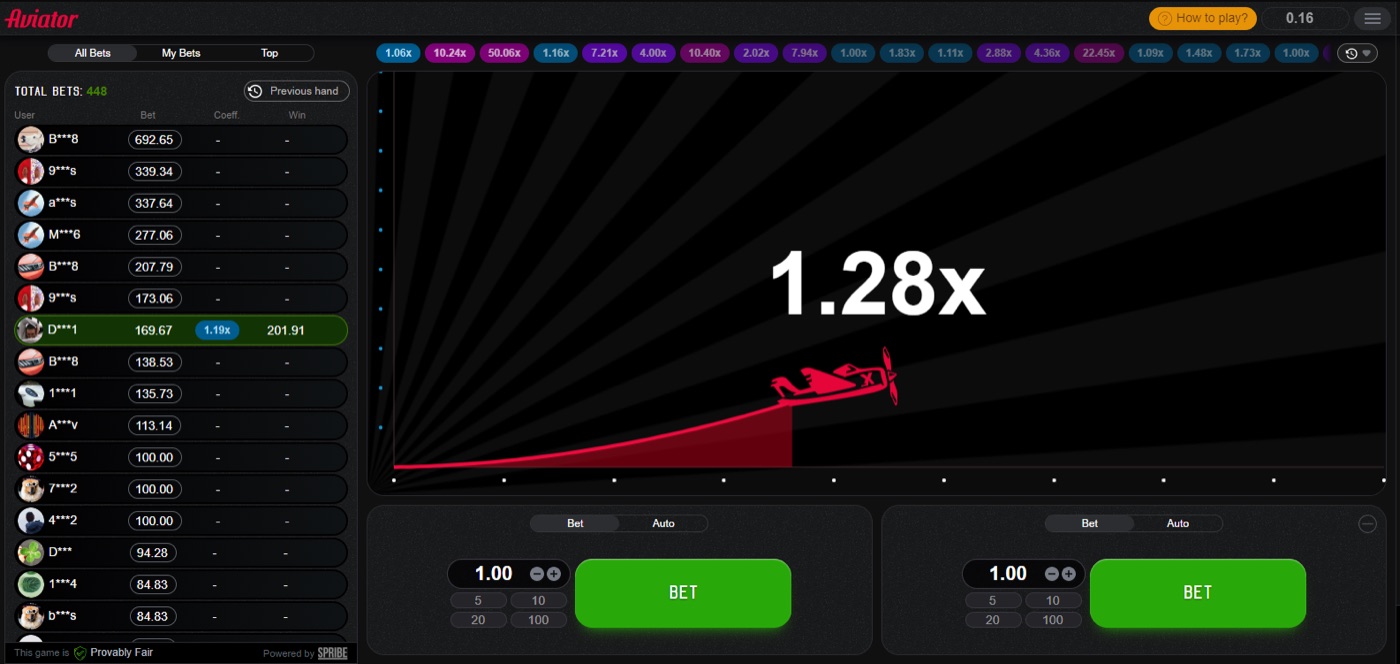
A live Aviator round: the multiplier climbs until the curve crashes.
The pace matters for expectations. At 60 to 90 rounds per hour, even a small stake repeats many times in one sitting, and the house edge is charged on every round. Ten dollars per round for an hour means $600 to $900 passing through the game, not $10 risked once.
RTP and crash-point probabilities
Aviator runs at a return to player of 97%, which leaves a house edge of 3%. The probability that a round reaches any multiplier m is 0.97 divided by m.
That single formula produces every cash-out probability in the game:
| Target multiplier | Chance the round reaches it | Payout on a $10 stake |
|---|---|---|
| 1.2x | 80.8% | $12.00 |
| 1.5x | 64.7% | $15.00 |
| 2x | 48.5% | $20.00 |
| 3x | 32.3% | $30.00 |
| 5x | 19.4% | $50.00 |
| 10x | 9.7% | $100.00 |
| 20x | 4.85% | $200.00 |
| 50x | 1.94% | $500.00 |
| 100x | 0.97% | $1,000.00 |
Two rows deserve attention. Roughly 3% of rounds, about 1 in 33, crash instantly at 1.00x, so no target is ever fully safe. And a 100x payout, the kind of screenshot shared in chats, lands in fewer than one round per hundred.
- The expected value is -3% of the stake at every cash-out target.
- A low target wins often but pays little; a high target pays more and misses most rounds.
- Moving the target changes the pattern of wins and losses, never the edge.
Variance and losing streaks
Aviator is a high-variance game. A 1.5x target fails in roughly 35 rounds out of 100, and those failures arrive in clusters rather than at even intervals.
Variance means short sessions sit far above or below the 97% average. Over thousands of rounds the math asserts itself; over fifty rounds almost anything can happen. This is why a session can double a bankroll or wipe out half of it without anything unusual occurring.
- Five or more consecutive losses at a 2x target are unremarkable and require no explanation.
- Instant 1.00x crashes can appear twice in a row; rounds are independent.
- A big multiplier landing right after you cashed out is normal, not a signal.
- Winning streaks feel like skill; they are the same distribution running in your favour.
This is also where Martingale fails. Doubling the stake after each loss reaches 1,024 times the base stake after ten straight losses, and the operator’s cap or your bankroll ends the sequence long before the math recovers it. Fibonacci and D’Alembert progressions are named in guides for the same purpose and fail for the same reason: the edge stays at 3% on every bet.
Bankroll rules for the game
Strategy guides for Aviator consistently cap a single-round stake at 2% of the bankroll. On a $200 bankroll, that is $4 per round.
Stakes start at about $0.10 and run to about $100 per bet, though exact limits depend on the operator. Win caps per round are also set by each operator, and Spribe does not publish a maximum multiplier, so quoted ceiling figures vary between guides.
- Stake no more than 2% of your bankroll on any round.
- Set a loss limit for the session before the first bet and stop at it.
- Set a win target for the session and leave when you reach it.
- Start in demo mode, which needs no registration, and test your target there first.
- Use Auto Play stop-on-loss and stop-on-win settings to enforce your own limits.
Treat the stake as the cost of entertainment, and if the game stops feeling like entertainment, take a break or use the deposit-limit tools your bookmaker provides.
Setting realistic win targets
Auto cash-out guides cluster around 1.5x to 2x as the conservative zone. A 1.3x to 1.5x target wins roughly 65 to 75 rounds out of 100.
Longer shots exist but belong in the 5x to 50x range, where the hit rate falls between 19.4% and 1.94%. Because the edge never moves, tools sold as a spribe aviator prediction cannot change what any multiplier target returns: the crash point of each round is committed by hash before the plane moves. The game passed 10 million monthly players by October 2023, and none of them found a loophole.
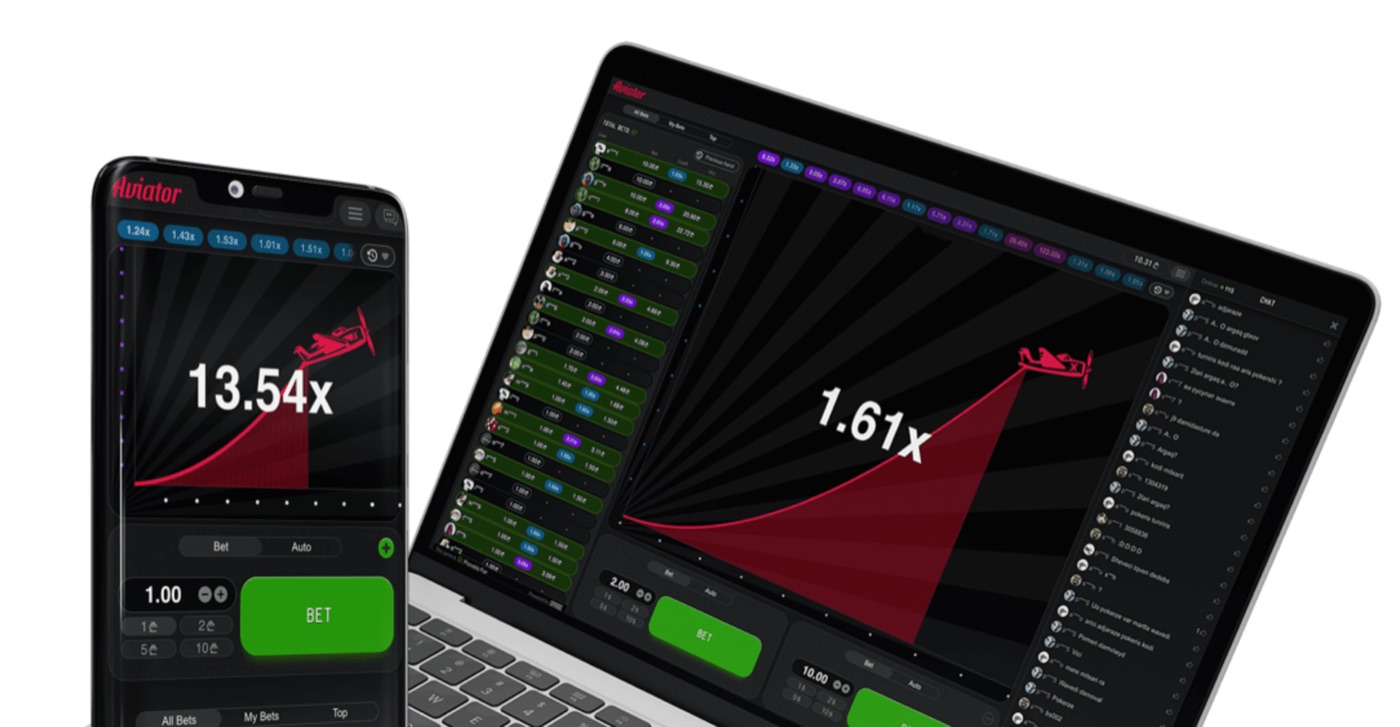
The same game on phone and laptop: the multiplier and the odds are identical.
A worked example makes the expectation concrete. You stake $10 per round with auto cash-out at 2x for 100 rounds. Total staked: $1,000. Expected winners: 48.5 rounds paying $20 each, which returns $970. Expected result: a $30 loss, exactly 3% of turnover. Finishing $150 up or $200 down in that set is variance; the $30 is the fixed price of playing.
Two bets and the auto tools
Aviator offers two bet panels per round, each with its own stake and cash-out setting. The interface includes Auto Cash-Out at a preset multiplier and Auto Bet for 10 to 100 rounds.
The common two-bet split uses one panel as cover and one as the shot. The safe panel cashes at 1.5x to 2x, while the second rides toward 5x to 10x. The split changes the shape of results — steadier small returns plus occasional large ones — but the combined expected value stays at -3% of total stakes.
- Auto Cash-Out locks a target so reaction speed and latency stop mattering.
- Auto Bet repeats a stake for 10 to 100 rounds with stop-on-win and stop-on-loss.
- Quick stake buttons and the Bet / Auto tabs speed up round-to-round betting.
- The live bets panel and the round history bar show other players’ results and past multipliers.
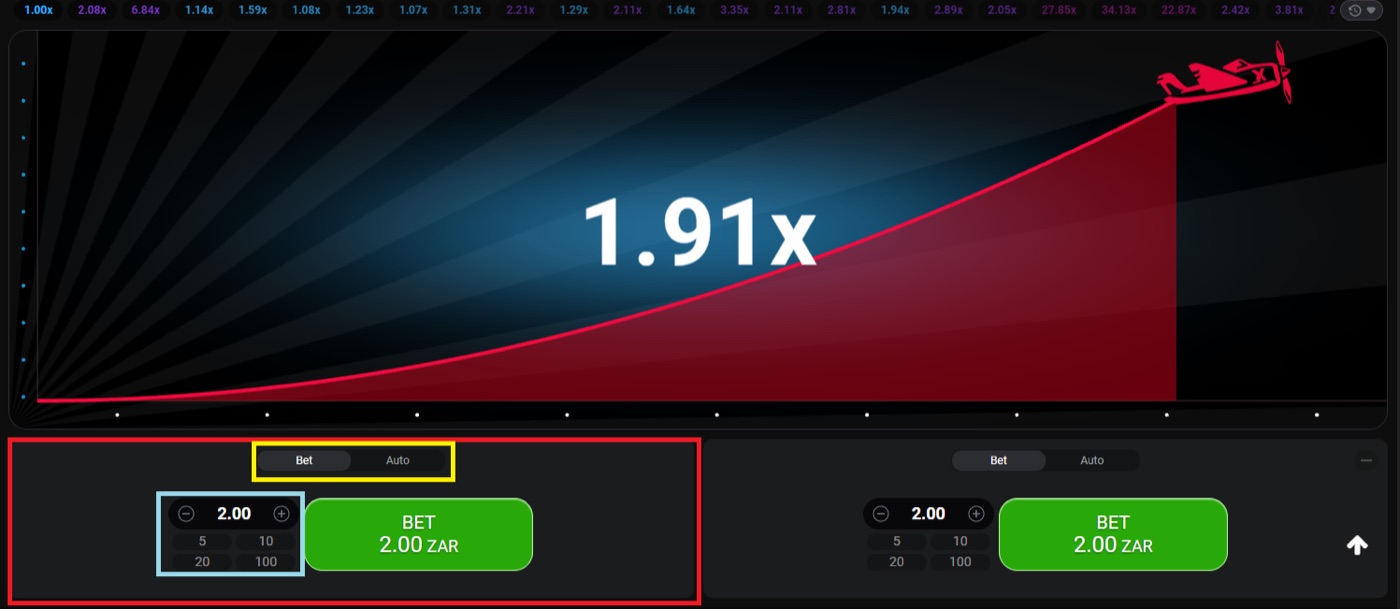
Two bet panels at 1.91x: each panel can hold a different cash-out plan.
Why predictors cannot work
Before each round, the server publishes a SHA-256 hash of its server seed. Client seeds from players are combined with it, and the crash point is fixed before take-off.
After the round, the inputs are revealed and can be checked with the verification tool inside the game. Neither the operator nor Spribe can alter a result once a round starts. This provably fair design is precisely why prediction is impossible: the outcome exists before anyone sees the curve, but it is hidden until the round ends.
There is no standalone official Aviator app from Spribe; the game runs inside a licensed operator’s website or app. The “Aviator Predictor” apps on APK mirrors are third-party clones, Telegram signal bots resell public math, and Hollywoodbets explicitly tells players not to spend money on predictors.
- Pattern reading and graph analysis of past multipliers do not change the odds; rounds are independent.
- “Best time to play” theories fail for the same reason; off-peak play gives a smoother connection, not better results.
- Strategy chart PDFs describe staking shapes, not ways around the 3% edge.
- Cash-out time-outs come from latency or a slow device: the request must reach the server before the crash.
Aviator FAQ
What is a realistic win target in Aviator?
A 1.3x to 1.5x target wins roughly 65 to 75 rounds out of 100, while 5x to 50x is the realistic range for long shots. Every target carries the same -3% expected value, so choose based on the swing you can tolerate.
Can an app predict the Aviator crash point?
No. The crash point is committed by a published hash before the round begins. Predictor apps are third-party clones, there is no official Spribe app, and no tool can read a result that is hidden until the round ends.
Why did my cash-out time out?
The cash-out request must reach the server before the crash. Latency or a slow device can delay it past the crash point, especially on older phones. Auto Cash-Out at a preset multiplier removes this risk entirely.
Is Aviator rigged?
The game is provably fair: the server seed hash is published before each round, the inputs are revealed afterwards, and results can be verified in the game. Rounds are independent, which explains streaks that feel personal.
Can you play Aviator for free?
Yes. Demo mode is available through operator sites and at demo.spribe.io, and it needs no registration. It is the right place to test cash-out targets before staking real money.
How much should I stake per round?
Guides recommend no more than 2% of your bankroll per round. Typical stakes run from about $0.10 to $100 per bet, but the exact minimum and maximum depend on the operator.